

Top Education Trends in India: IB, IGCSE & A-Level Growth Explained
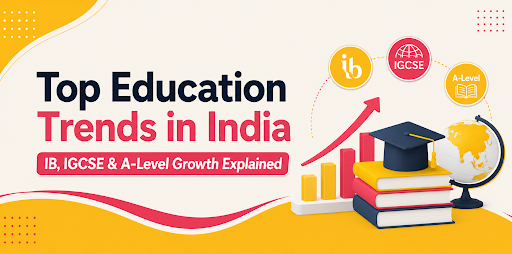
The education system in India is changing fast. In the past ten years, people have moved away from following the traditional board and have sought out different courses that would give them an international experience and would help develop their analytical abilities and research skills. Some of the most popular international education courses that students follow today include the IB curriculum, IGCSE curriculum, and A-level curriculum.
With an increase in the popularity of studying abroad among students in the country, the IBDP in Mumbai has seen a massive rise in demand because students want a course that will allow them access to good educational institutions within and outside the country. The importance of having an international education is also increasing because of the rise in global careers.
Why International Curricula Are Growing in India
The traditional system of education in India has been built on memorization and testing proficiency. Though these systems are valuable, today's students need an educational method that promotes creativity, practicality, and independent learning.
Reasons why international boards are gaining popularity include the following facts:
- Encourage conceptual learning rather than rote learning.
- Prepare students to apply for admission to international universities.
- Enhance communication and research skills in students.
- Give freedom in subject choice.
- Encourage extracurricular and practical application of knowledge.
Today's parents are more conscious about the international standards of education and career. It is one reason why many students are opting for the IB, IGCSE, and A-level programs in metropolitan cities.
Understanding the IB Curriculum
The International Baccalaureate (IB) is famous for its tough academic regime and a balanced learning method. The International Baccalaureate Diploma Programme (IBDP) is especially well-regarded in higher education institutions for being tailored for the age group between 16 and 19 years.
Some characteristics that distinguish the IB curriculum include:
- Critical thinking and inquiry-based learning
- Interdisciplinary approach
- Research and analysis
- Community participation and creativity
Pupils are supposed to balance different subjects along with the following core parts:
- Theory of Knowledge (TOK)
- Extended Essay (EE)
- Creativity, Activity, Service (CAS)
These factors assist pupils in becoming independent learners who are proficient both academically and personally.
The Rise of IGCSE in Urban India
The International General Certificate of Secondary Education (IGCSE) has gained a lot of popularity among secondary and senior secondary level students in India. This program has been developed by the organization called Cambridge Assessment International Education, and it is flexible and pupil-friendly.
With the IGCSE program, one can study a range of disciplines thoroughly while improving their practical knowledge and skill of solving problems. Moreover, schools and parents are fond of this program since it provides a perfect base for further studying in other international programs, such as IB or A-levels.
There are several reasons for this popularity, namely:
- Global curriculum standards
- Highly concentrated on building English proficiency skills
- A wide range of disciplines to select from
- Assessment is applied in nature
- Preparing well for international education
IGCSE is growing more relevant, with an increasing number of Indian students who consider studying abroad.
Why A-Levels Continue to Hold Global Value
Few programmes are as internationally recognized for university admissions as A-Levels. This course is popular for admission to British, Singaporean, and Australian universities, among others.
One of the main advantages of A-Levels is their specialization aspect, where students have access to subjects that interest them and will be useful for their future profession.
The programme helps those interested in a career in the following spheres:
- Engineering
- Medicine
- Economics and Finance
- Law
- Computing science
- Humanities and Social Sciences
It also helps students develop in-depth knowledge in particular subjects, encourages research, and builds skills needed for university admissions.
The Shift Towards Skill-Based Education
Today, one of the latest trends in Indian education is a switch from theory-oriented studies to skill-oriented courses. Students are not assessed through tests anymore; now schools pay attention to practical skills acquired during education.
In other words, the importance of:
- Communication skills
- Research skills
- Public speech abilities
- Leadership qualities
- Collaboration and teamwork
- Time management
The change is helping the students become more adaptable and future-ready in the competitive environment of the world.
Where there is stiff competition in places such as Mumbai, the need for proper guidance to assist in managing the above-mentioned pressures has been increasing in relation to guidance for IBDP in Mumbai.
Technology and Global Exposure Are Influencing Education Choices
Technology-driven changes have also had an influence on the growth of international education. The students today have global educational platforms available to them for online learning as well as participation in international competitions.
With this change, the parents are now comfortable with globally aligned curricula that help offer their wards the following advantages:
- Global exposure
- Updated teaching methods
- Opportunity to study at global universities
- Improved adaptability to the global system
The educational decisions are now based on more than marks since the students' long-term careers are also being considered.
Increasing Focus on University Readiness
A key factor that is fueling the growth of IB, IGCSE, and A-Level courses is university readiness. To gain admission to international universities, the students need to showcase:
- Consistency in academics
- Independent thinking
- Previous research experience
- Participation in extra-curricular activities
- Excellent communication skills
IB and other such programmes naturally make students well-versed with academic writing, research, and presentation-type examinations from the beginning of their schooling career.
They help students cope better with university life than students who have been exposed only to the exam-oriented educational system.
Parents Are Prioritising Holistic Development
Modern-day parents are increasingly looking at educational systems that help students develop emotionally and socially, along with intellectual abilities. While academic success does matter, the emphasis is also on mental well-being and building self-confidence.
Most international systems tend to encourage students to:
- Play sports and indulge in creative pursuits
- Volunteer in community services
- Form an independent opinion
- Gain confidence through interactive lessons
Such an all-inclusive approach is one of the major factors that contribute to the continuous growth of international education programs in India.
Preparing Students for a Global Future
Education in India is taking a new turn and is becoming more international, flexible, and skill-based. IB, IGCSE, and A-Level programs are no longer considered as alternative educational options but are being seen as means through which students can get ready for their international careers and education abroad.
As competition grows and university expectations keep changing, it may help students greatly if they seek academic mentorship and guidance from professionals. In the case of parents searching for IBDP in Mumbai, schools such as Axios Career Academy have proven to be reliable sources of academic guidance by assisting candidates pursuing IB, IGCSE, and A Level programmes and seeking university admissions. As the world becomes smaller with global recognition and educational opportunities becoming vital, there is much importance to structured academic guidance.